Tesla 2026.2.9 Release Notes
Last updated 01-Mar-2026
Tesla 2026.2.9 Release notes including Autopilot Naming Update, FSD (Supervised) v14.2.2.5, Arrival Options, Speed Profiles, UI Improvements, Brake Confirm, Full Self-Driving (Supervised), all generated by real cars. Each release note includes a list of the countries, mndels and certain hardware features which apply.
For information on which versions are on specific models and years, see our Trending Tesla releases and statistics for more information.
Release 2026.2.9
Including 2026.2.9, (<0.1% of cars)
Regional availability of 2026.2.9 by modelNorth America-MX-MYCTEurope-----RoW-----
A more detailed heat map and release statistics are available.
Autopilot Naming Update (part of 2026.2.9)
This change only updates the name of certain features and text in your vehicle, and does not change the way your features behave.
- Navigate on Autopilot has been renamed to Navigate on Autosteer
- FSD Computer has been renamed to AI Computer.
Seen in US
Seen on MX(2022+) MY CT
Seen on AP versions AP4
Seen on MCU hardware Ryzen
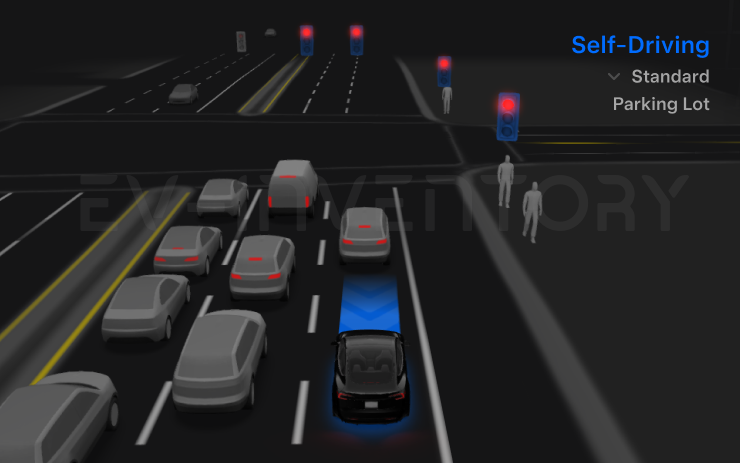
FSD (Supervised) v14.2.2.5 (part of 2026.2.9)
Full Self-Driving (Supervised) v14.2.2.5 includes:
- Upgraded the neural network vision encoder, leveraging higher resolution features to further improve scenarios like handling emergency vehicles, obstacles on the road, and human gestures.
- Added Arrival Options for you to select where FSD should park: in a Parking Lot, on the Street, in a Driveway, in a Parking Garage, or at the Curbside.
- Added handling to pull over or yield for emergency vehicles (e.g. police cars, fire trucks, ambulances).
- Added navigation and routing into the vision-based neural network for real-time handling of blocked roads and detours.
- Added additional Speed Profile to further customize driving style preference.
- Improved handling for static and dynamic gates.
- Improved offsetting for road debris (e.g. tires, tree branches, boxes).
- Improve handling of several scenarios including: unprotected turns, lane changes, vehicle cut-ins, and school busses.
- Improved FSD's ability to manage system faults and recover smoothly from degraded operation for enhanced reliability.
- Added alerting for residue build-up on interior windshield that may impact front camera visibility. If affected, visit Service for cleaning!
- Camera visibility can lead to increased attention monitoring sensitivity.
Upcoming Improvements:
- Overall smoothness and sentience
- Parking spot selection and parking quality
Seen in US
Seen on MX(2022+) MY CT
Seen on AP versions AP4
Seen on MCU hardware Ryzen
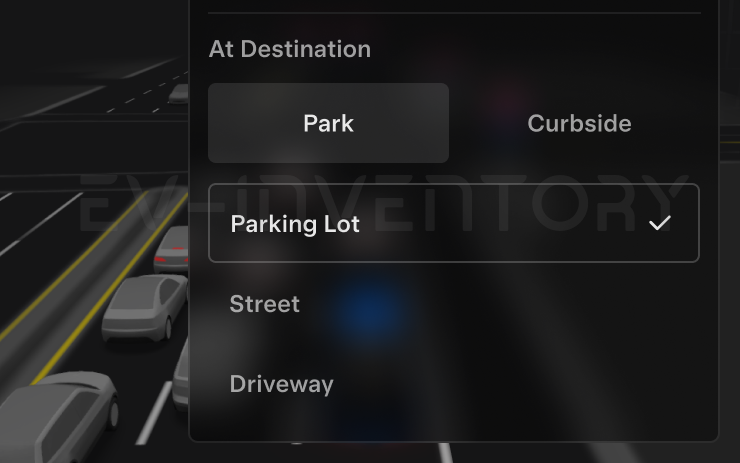
Arrival Options (part of 2026.2.9)
- You can now select an arrival option such as Parking Lot, Street, Driveway, Parking Garage and Curbside for Robotaxi-style drop offs.
- Your preferences for arrival options and preferred parking positions are persisted for each destination.
- Our reasoning model will assess the suitable options for your destination and pick an intuitive default.
- The navigation pin will be adjusted based on the selected Arrival Option.
Seen in US
Seen on MX(2022+) MY CT
Seen on AP versions AP4
Seen on MCU hardware Ryzen
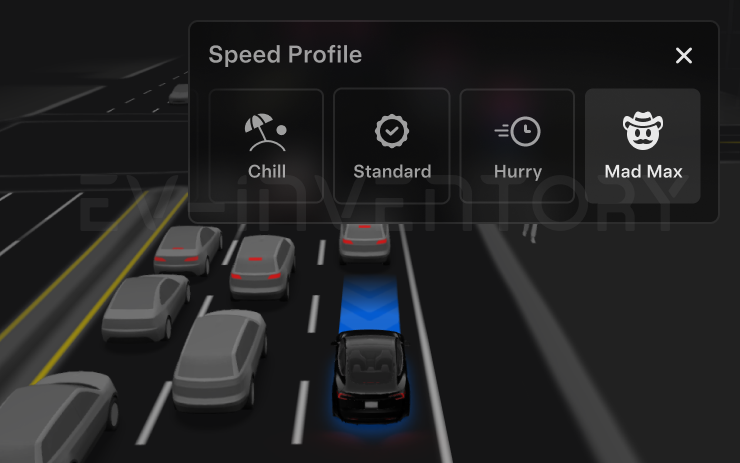
Speed Profiles (part of 2026.2.9)
FSD (Supervised) will now determine the appropriate speed based on a mix of driver profile, speed limit, and surrounding traffic.
- Introduced new Speed Profile SLOTH, which comes with lower speeds & more conservative lane selection than CHILL.
- Introduced new speed profile MAD MAX, which comes with higher speeds and more frequent lane changes than HURRY.
- Driver profile now has a stronger impact on behavior. The more assertive the profile, the higher the max speed.
- Right scroll-wheel up/down now adjusts Speed Profile setting rather than your precise max speed offset selection in mph/kph.
Seen in US
Seen on MX(2022+) MY CT
Seen on AP versions AP4
Seen on MCU hardware Ryzen
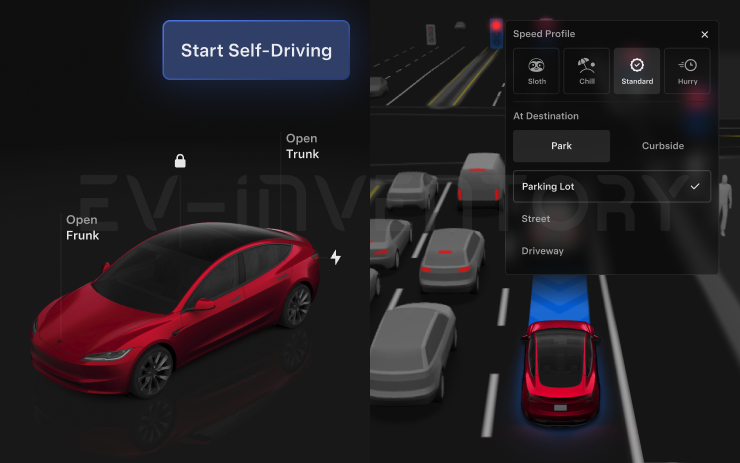
UI Improvements (part of 2026.2.9)
- You can now view your Self-Driving stats under Controls > Self-Driving.
- Start Self-Driving with a tap of the touchscreen from Park, or any time during your drive.
- Adjust settings like the Speed Profile and Arrival Options directly from the Self-Driving visualization on the center display.
Seen in US
Seen on MX(2022+) MY CT
Seen on AP versions AP4
Seen on MCU hardware Ryzen
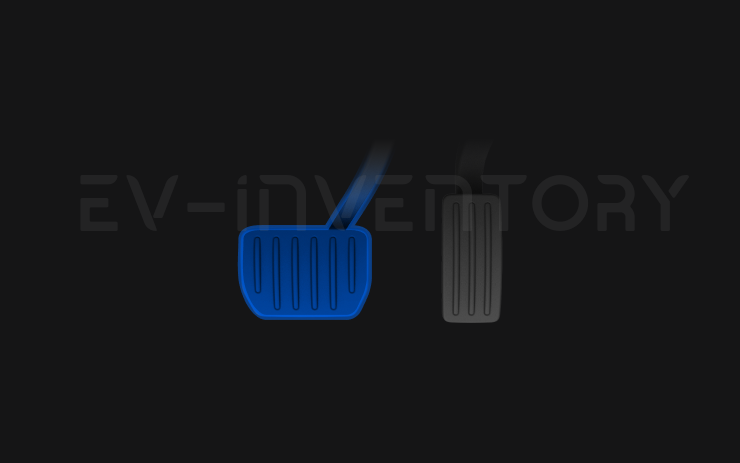
Brake Confirm (part of 2026.2.9)
Brake Confirm for the Start Self-Driving button is now defaulted off. When disabled, Start Self-Driving will not require you to press and release the brake to confirm engagement.
You can enable Brake Confirm in Self-Driving > Brake Confirm.
Seen in US
Seen on MX(2022+) MY CT
Seen on AP versions AP4
Seen on MCU hardware Ryzen
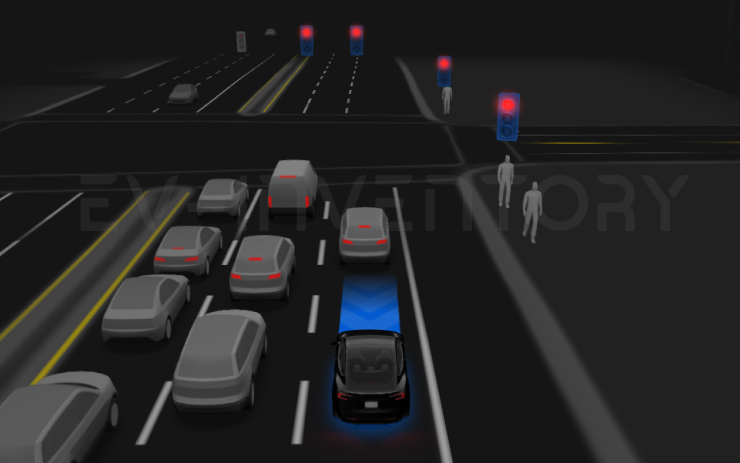
Full Self-Driving (Supervised) (part of 2026.2.9)
Under your supervision, Full Self-Driving (Supervised) can drive your Tesla almost anywhere. It will start from a parked position, make lane changes, select forks to follow your navigation route, navigate around other vehicles and objects, make left and right turns and park at your destination. You and anyone you authorize must use additional caution and remain attentive. It does not make your vehicle autonomous. Do not become complacent.
Full Self-Driving (Supervised) is enabled on your vehicle. To use the feature, press the Start Self-Driving button on the UI, or press the right scroll wheel button once. You can disable Full Self-Driving (Supervised) in Self-Driving Settings.
Seen in US
Seen on MX(2022+) MY CT
Seen on AP versions AP4
Seen on MCU hardware Ryzen
Other release notes for the family: 2026.2
Autopilot Naming Update (part of 2026.2.9)
This change only updates the name of certain features and text in your vehicle, and does not change the way your features behave.
- Navigate on Autopilot has been renamed to Navigate on Autosteer
- FSD Computer has been renamed to AI Computer.
Seen in US
Seen on MX(2022+) MY CT
Seen on AP versions AP4
Seen on MCU hardware Ryzen
FSD (Supervised) v14.2.2.5 (part of 2026.2.9)
Full Self-Driving (Supervised) v14.2.2.5 includes:
- Upgraded the neural network vision encoder, leveraging higher resolution features to further improve scenarios like handling emergency vehicles, obstacles on the road, and human gestures.
- Added Arrival Options for you to select where FSD should park: in a Parking Lot, on the Street, in a Driveway, in a Parking Garage, or at the Curbside.
- Added handling to pull over or yield for emergency vehicles (e.g. police cars, fire trucks, ambulances).
- Added navigation and routing into the vision-based neural network for real-time handling of blocked roads and detours.
- Added additional Speed Profile to further customize driving style preference.
- Improved handling for static and dynamic gates.
- Improved offsetting for road debris (e.g. tires, tree branches, boxes).
- Improve handling of several scenarios including: unprotected turns, lane changes, vehicle cut-ins, and school busses.
- Improved FSD's ability to manage system faults and recover smoothly from degraded operation for enhanced reliability.
- Added alerting for residue build-up on interior windshield that may impact front camera visibility. If affected, visit Service for cleaning!
- Camera visibility can lead to increased attention monitoring sensitivity.
Upcoming Improvements:
- Overall smoothness and sentience
- Parking spot selection and parking quality
Seen in US
Seen on MX(2022+) MY CT
Seen on AP versions AP4
Seen on MCU hardware Ryzen
Arrival Options (part of 2026.2.9)
- You can now select an arrival option such as Parking Lot, Street, Driveway, Parking Garage and Curbside for Robotaxi-style drop offs.
- Your preferences for arrival options and preferred parking positions are persisted for each destination.
- Our reasoning model will assess the suitable options for your destination and pick an intuitive default.
- The navigation pin will be adjusted based on the selected Arrival Option.
Seen in US
Seen on MX(2022+) MY CT
Seen on AP versions AP4
Seen on MCU hardware Ryzen
Speed Profiles (part of 2026.2.9)
FSD (Supervised) will now determine the appropriate speed based on a mix of driver profile, speed limit, and surrounding traffic.
- Introduced new Speed Profile SLOTH, which comes with lower speeds & more conservative lane selection than CHILL.
- Introduced new speed profile MAD MAX, which comes with higher speeds and more frequent lane changes than HURRY.
- Driver profile now has a stronger impact on behavior. The more assertive the profile, the higher the max speed.
- Right scroll-wheel up/down now adjusts Speed Profile setting rather than your precise max speed offset selection in mph/kph.
Seen in US
Seen on MX(2022+) MY CT
Seen on AP versions AP4
Seen on MCU hardware Ryzen
UI Improvements (part of 2026.2.9)
- You can now view your Self-Driving stats under Controls > Self-Driving.
- Start Self-Driving with a tap of the touchscreen from Park, or any time during your drive.
- Adjust settings like the Speed Profile and Arrival Options directly from the Self-Driving visualization on the center display.
Seen in US
Seen on MX(2022+) MY CT
Seen on AP versions AP4
Seen on MCU hardware Ryzen
Brake Confirm (part of 2026.2.9)
Brake Confirm for the Start Self-Driving button is now defaulted off. When disabled, Start Self-Driving will not require you to press and release the brake to confirm engagement.
You can enable Brake Confirm in Self-Driving > Brake Confirm.
Seen in US
Seen on MX(2022+) MY CT
Seen on AP versions AP4
Seen on MCU hardware Ryzen
Full Self-Driving (Supervised) (part of 2026.2.9)
Under your supervision, Full Self-Driving (Supervised) can drive your Tesla almost anywhere. It will start from a parked position, make lane changes, select forks to follow your navigation route, navigate around other vehicles and objects, make left and right turns and park at your destination. You and anyone you authorize must use additional caution and remain attentive. It does not make your vehicle autonomous. Do not become complacent.
Full Self-Driving (Supervised) is enabled on your vehicle. To use the feature, press the Start Self-Driving button on the UI, or press the right scroll wheel button once. You can disable Full Self-Driving (Supervised) in Self-Driving Settings.
Seen in US
Seen on MX(2022+) MY CT
Seen on AP versions AP4
Seen on MCU hardware Ryzen

Grok with Navigation Commands (Beta) (part of 2026.2.6.5)
You can now talk to Grok, an intelligent assistant built by xAI. You can choose Grok's voice and personality, ranging from Storyteller to Unhinged.
Grok can add and edit navigation destinations, becoming your personal guide. You can ask Grok to navigate to the best Thai restaurant near you, find a Supercharger within walking distance of a coffee shop, or even plan a romantic sightseeing tour. Requires Premium Connectivity or a WiFi connection. Conversations are anonymous to Tesla and not associated with your vehicle.
To launch Grok, go to App Launcher > Grok, or long-press the voice button on your steering wheel after you have logged in to Grok. Set Grok's personality to Assistant to use Navigation Commands.
Note: Grok is currently in early Beta and does not support voice commands for car controls other than navigation. Existing voice commands remain unchanged.
Seen in AU NZ
Seen on M3 MY M3(H) MY(J)
Seen on AP versions AP4
Seen on MCU hardware Ryzen
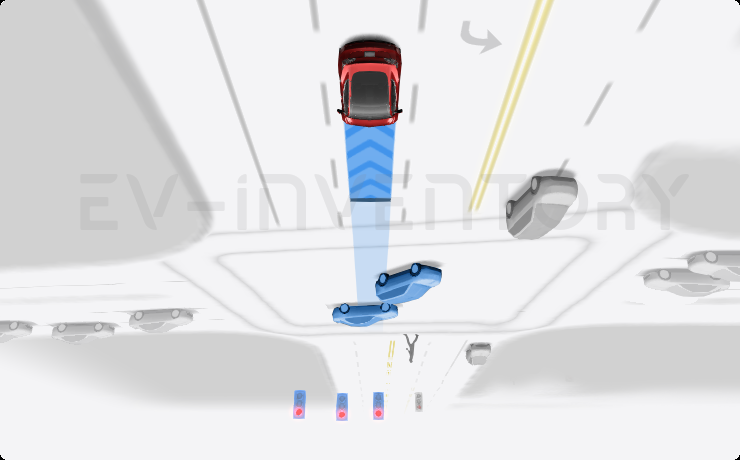
FSD (Supervised) v13.2.9 Down Under (part of 2026.2.6.5)
FSD (Supervised) v13 Down Under upgrades every part of the end-to-end driving network.
Includes:
- 36 Hz, full-resolution AI4 video inputs
- Native AI4 inputs and neural network architectures
- 4.2x data scaling
- 5x training compute scaling (enabled by the Cortex cluster)
- Reduced photon-to-control latency by 2x
- Integrated unpark, reverse, and park capabilities
- Improved reward predictions for collision avoidance
- Improved camera cleaning
- Redesigned controller for smoother, more accurate tracking
- Dynamic routing around road closures, which displays them along an affected route when they are detected by the fleet
Upcoming Improvements:
- 3x model size scaling
- 3x model context length scaling
- Audio inputs for better handling of emergency vehicles
- Improved reward predictions for navigation
- Improvements to false braking and slower driving in parking lots
- Support for destination options including pulling over, parking in a spot, driveway, or garage
- Efficient representation of maps and navigation inputs
- Improved handling of camera occlusions
Seen in AU NZ
Seen on M3 MY M3(H) MY(J)
Seen on AP versions AP4
Seen on MCU hardware Ryzen
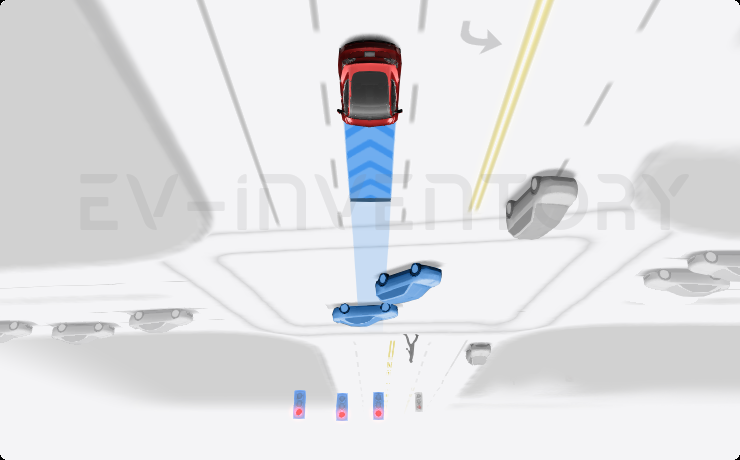
Full Self-Driving (Supervised) Down Under (part of 2026.2.6.5)
Under your supervision, Full Self-Driving (Supervised) Down Under can drive your Tesla almost anywhere. It will make lane changes, select forks to follow your navigation route, navigate around other vehicles and objects, and make left and right turns. You and anyone you authorise must use additional caution and remain attentive. It does not make your vehicle autonomous. Do not become complacent.
Full Self-Driving (Supervised) Down Under is enabled on your vehicle. To use the feature, press the right scroll wheel button once. You can disable Full Self-Driving (Supervised) Down Under in Autopilot Settings.
Be aware of road conditions or hazards (such as pot holes and speed bumps) and operate the vehicle responsibly under all circumstances.
Seen in AU NZ
Seen on M3 MY M3(H) MY(J)
Seen on AP versions AP4
Seen on MCU hardware Ryzen
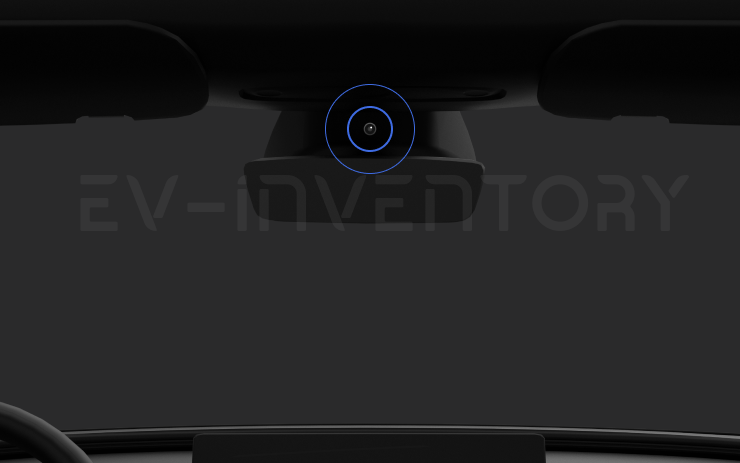
Vision-Based Attention Monitoring (part of 2026.2.6.5)
When Full Self-Driving (Supervised) is enabled, the driver monitoring system primarily relies on the cabin camera to determine driver attentiveness. Cabin camera must have clear visibility (e.g., camera is not occluded, eyes, arms, are visible, there is sufficient cabin illumination, and the driver is looking forward at the road without sunglasses, or other objects covering their eyes). In other circumstances, the driver monitoring system will primarily rely on torque-based (steering wheel) monitoring to detect driver attentiveness.
If the cabin camera detects inattentiveness, a warning will appear. The warning can be dismissed by the driver immediately reverting their attention back to the road ahead. Warnings will escalate depending on the nature and frequency of detected inattentiveness, with continuous inattention leading to a Strikeout.
Seen in AU NZ
Seen on M3 MY M3(H) MY(J)
Seen on AP versions AP4
Seen on MCU hardware Ryzen

Grok with Navigation Commands (Beta) (part of 2026.2.6.1)
You can now talk to Grok, an intelligent assistant built by xAI. You can choose Grok's voice and personality, ranging from Storyteller to Unhinged.
Grok can add and edit navigation destinations, becoming your personal guide. You can ask Grok to navigate to the best Thai restaurant near you, find a Supercharger within walking distance of a coffee shop, or even plan a romantic sightseeing tour. Requires Premium Connectivity or a WiFi connection. Conversations are anonymous to Tesla and not associated with your vehicle.
To launch Grok, go to App Launcher > Grok, or long-press the voice button on your steering wheel after you have logged in to Grok. Set Grok's personality to Assistant to use Navigation Commands.
Note: Grok is currently in early Beta and does not support voice commands for car controls other than navigation. Existing voice commands remain unchanged.
Seen in AU NZ
Seen on M3 MY M3(H) MY(J)
Seen on AP versions AP3 AP4
Seen on MCU hardware Ryzen
Minor Fixes (part of 2026.2.6.1)
This release contains minor fixes and improvements
Seen in AU NZ TH
Seen on M3 MY
Seen on AP versions AP3
Seen on MCU hardware Intel Ryzen

Grok with Navigation Commands (Beta) (part of 2026.2.6)
You can now talk to Grok, an intelligent assistant built by xAI. You can choose Grok's voice and personality, ranging from Storyteller to Unhinged.
Grok can add and edit navigation destinations, becoming your personal guide. You can ask Grok to navigate to the best Thai restaurant near you, find a Supercharger within walking distance of a coffee shop, or even plan a romantic sightseeing tour. Requires Premium Connectivity or a WiFi connection. Conversations are anonymous to Tesla and not associated with your vehicle.
To launch Grok, go to App Launcher > Grok, or long-press the voice button on your steering wheel after you have logged in to Grok. Set Grok's personality to Assistant to use Navigation Commands.
Note: Grok is currently in early Beta and does not support voice commands for car controls other than navigation. Existing voice commands remain unchanged.
Seen in AE AT BE CH CZ DE ES FR GB GG GR HR IE IT LU NL PT RE SE SI
Seen on MS(2021+) MX(2022+) M3 MY M3(H) MY(J)
Seen on AP versions AP3 AP4
Seen on MCU hardware Intel Ryzen
Minor Fixes (part of 2026.2.6)
This release contains minor fixes and improvements
Seen in AT AU BR BY CA CH DE DO ES FR GB HK IE IT JP MO MX MY NL NZ PR PT SG TH TW UA US
Seen on MX MS(2021+) MX(2022+) M3 MY M3(H) MY(J) CT
Seen on AP versions AP1 AP2,5 AP3 AP4 PreAP1
Seen on MCU hardware Intel Ryzen
Minor Fixes (part of 2026.2.3.1)
This release contains minor fixes and improvements
Seen in TW
Seen on MY(J)
Seen on AP versions AP4
Seen on MCU hardware Ryzen

Unlatching Charge Cable (part of 2026.2.3)
Charging can now be stopped and the charge cable released by pulling and holding the rear left door handle for 3 seconds, provided the vehicle is unlocked or a recognized key is nearby. This is especially useful when the charge cable unlatch button does not work or a charging adapter is stuck in the charge port. You can still release the cable using the vehicle touchscreen or the Tesla app.
Seen in BR CA DO MX PR RU TW UA US
Seen on M3 MY M3(H) MY(J)
Seen on AP versions AP2,5 AP3 AP4
Seen on MCU hardware Intel Ryzen
Minor Fixes (part of 2026.2.3)
This release contains minor fixes and improvements
Seen in AE AT AU BA BE BG BY CA CH CZ DE DK EE ES FI FR GB GG GR HK HR HU IE IL IS IT JP LT LU LV MD MK MO MY NL NO NZ PL PR PS PT RO RS SE SG SI SK TH TR TW UA US
Seen on MX MS(2021+) MX(2022+) M3 MY M3(H) MY(J) CT
Seen on AP versions AP1 AP2,5 AP3 AP4 PreAP1
Seen on MCU hardware Intel Ryzen

Child Left Alone Detection (part of 2026.2.3)
If an unattended child is detected, the vehicle will flash the exterior indicator lights, play an alert tone, and send a notification to your Tesla app. This will repeat at regular intervals until you return to your vehicle. Cabin data is processed locally and is not transmitted to Tesla.
This feature is enabled by default. To disable, go to Controls > Safety > Child Left Alone Detection.
Seen in IL
Seen on M3(H) MY(J)
Seen on AP versions AP4
Seen on MCU hardware Ryzen
Minor Fixes (part of 2026.2)
This release contains minor fixes and improvements
Seen in AT AU BE CA CH CZ DE DK ES FI FR GB GR IE IT MY NL NO PL PR PT RO SE SG SI TH TR TW US
Seen on MX MS(2021+) MX(2022+) MY M3(H) MY(J)
Seen on AP versions AP3 AP4
Seen on MCU hardware Intel Ryzen
Reboot after an update
Lot's of people have random issues after a software install, many of them curing themselves after a reboot. As a general rule, we'd suggest always doing a scroll wheel reboot after a software update, simply press the two steering wheel scroll wheels until the screen turns off and then let go. The screen will come back within a minute or so, depending on hardware. It's certainly worth doing this is you notice any unusual behaviour, but prevention is better than cure. There's a second reset option which is to change the car configuration slightly, either the language, or wheel type. This also causes the car to do a soft reset and this has returned missing features such as Tidal. Our Guide to rebooting your Tesla provides more details.
How to get the latest Tesla Software Update?
In a word, you can't really force it yourself although you can help the car to download the update once it's been allocated to have an update. To do so, connect the car to WiFi, and maybe even consider a wireless hotspot when in use. Car's not connected to WiFi generally do not receive updates quickly.
If you visit the software screen and see the car hasn't checked for a few days, perform a scroll wheel reset. The car typically checks as soon as it reboots and we've had a software update immediately afterwards as a result.
You may find the car sticks at 50% for a while. We've seen reports that keeping the car awake will help speed past past this point as the car will try and sleep and halt the process. Even keeping the mobile phone app open may help to prevent the car sleeping.
Why do I not get some of the features or changes mentioned?
There are a number of reasons why a particular feature or change may not be included when your car upgrades. These include regional restrictions, hardware specific features, model specific updates and some changes are linked to software options purchased such as EAP or FSD. There are also times when software release notes are provided but only Tesla test engineers get the updates.
Not having a listed feature or update for a particular car is therefore quite normal. Some websites try to detail which cars get which features but this is often inaccurate, such as the blended braking update that came out with 2022.16 and the alternate routes option in 2022.28.
Against each release note we now list the car models and countries where a particular release note has been seen.
I thought I already had a listed feature?
Just as a feature may not land in every car, the feature may be mentioned in later releases when your car already has it. The release notes in the car are tuned to your car so, and while in general the car will only report a new feature once, that is not a rule that always holds true. Some websites say the feature is not available in your country whereas the reality is the feature has been there for some time
I'm on the FSD City Streets Beta
The FSD City Streets Beta is usually 2 to 3 releases behind the general software releases. This is normal.
Numbering convention
Release notes are numbered roughly using the a year.family.major.minor format. The year is self explanatory, the family release typically increments in 4's and is roughly the week of the year when the release family is launched, although these tend to slip over the course of the year. The major and minor release numbers of much debated, we personally believe these rarely contain new features not included in the family, and if there are differences it is linked to hardware specific versions.
When reviewing release notes, you may be interested in how a feature has evolved. To enable this we have also included a keyword search where you can search for a word or phrase and we will filter the results accordingly.